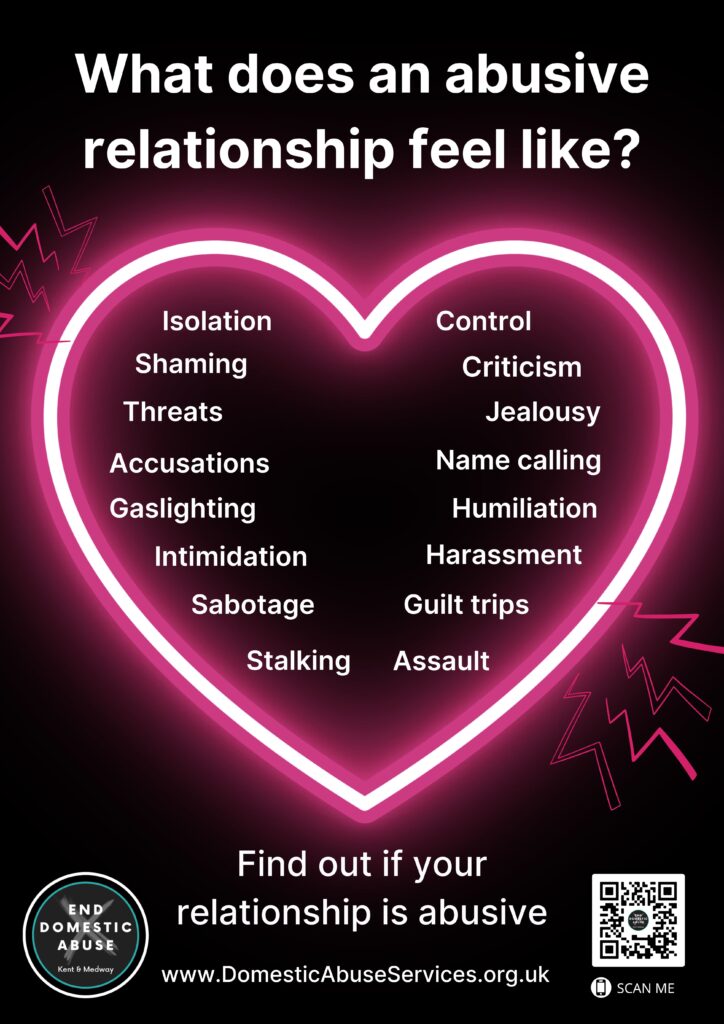
Any incident or pattern of incidents of controlling, coercive, threatening behaviour, violence or abuse between those aged 16 or over, or have been intimate partners or family members regardless of gender, or sexuality.
The abuse can encompass, but is not limited to, psychological, physical, sexual, financial and emotional. This definition also includes so-called 'honour'-based violence, forced marriage and female genital mutilation (FGM).
Definition as provided by the Crown Prosecution Service.
Women's Aid define domestic abuse as 'an incident or pattern of incidents of controlling, coercive, threatening, degrading and violent behaviour, including sexual violence, in the majority of cases by a partner or ex-partner, but also by a family member or carer. It is very common. In the vast majority of cases it is experienced by women and is perpetrated by men. '
Information Provided by Women's Aid

Psychological or emotional abuse - Constant criticism, humiliation or insults, making you feel guilty, blaming you for their behaviour, giving you the silent treatment, or making you question your own memories or experiences (gaslighting).
Coercive control - Using a pattern of behaviour to control your life, such as isolating you from friends or family, monitoring where you go, checking up on you constantly, controlling what you wear or who you spend time with, or making you feel afraid to disagree or say no.
Physical abuse - Hitting, pushing, shoving, restraining you, damaging your belongings, blocking your way, throwing objects, or claiming physical harm was "just a joke" or "not that serious."
Technology-facilitated abuse - Demanding access to your phone or passwords, checking your messages, tracking your location, repeatedly calling or messaging to monitor where you are, sharing intimate images without your consent, or using technology to intimidate or control you.
Economic or financial abuse - Pressuring you to pay for everything, controlling your spending, borrowing money without repaying it, preventing you from working or studying, taking your income, or building debt in your name without your knowledge.
Sexual abuse - Pressuring, manipulating or guilt-tripping you into sexual activity, ignoring or challenging your boundaries, making you feel you "owe" them sex, removing a condom without your consent (stealthing), or sharing intimate images without your permission.